What the heck is a “Trump Account?”
Launching July 5, 2026
Trump Accounts are a NEW type of tax-advantaged savings and investment account for children in the United States. They were created under the One Big Beautiful Bill Act and are intended to help families start building long-term savings early in a child’s life. In many ways, they function like a custodial IRA-style investment account that grows tax-deferred until the child reaches adulthood.
Here are the key ideas:
ALL U.S. children under 18 with a valid Social Security Number are eligible to establish a Trump Account. Parents or legal guardians can open and manage accounts on behalf of their children. You can elect to open Trump Accounts for your eligible children when you file your 2025 taxes or through an online portal that will be available by summer 2026.
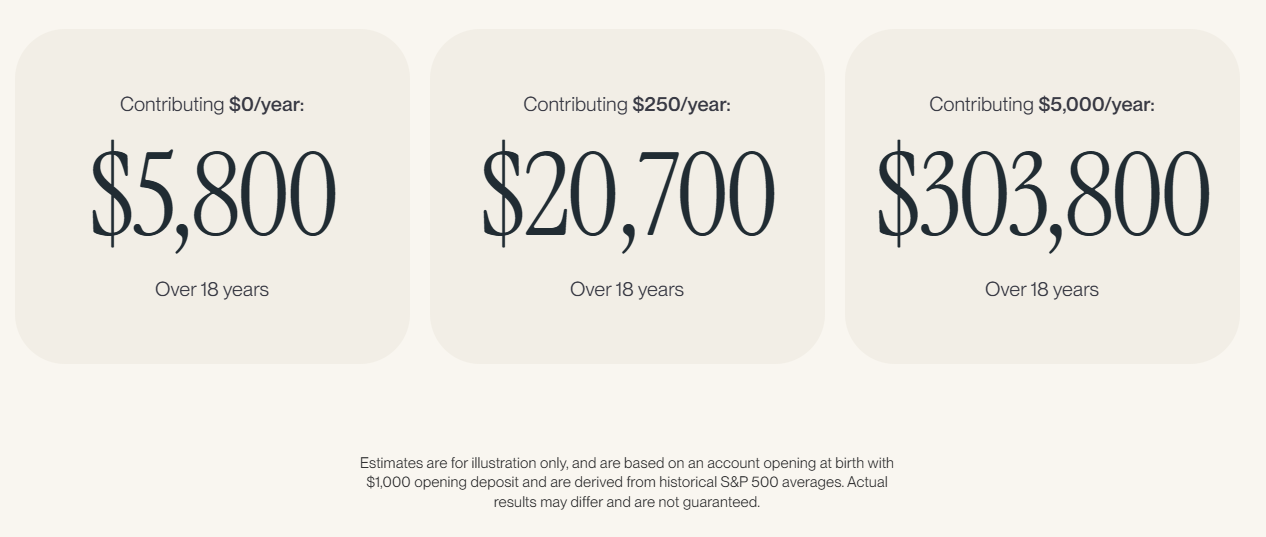
Every eligible child born between January 1, 2025, and December 31, 2028 can receive a one-time $1,000 contribution from the U.S. Treasury when an account is opened.
Your child’s account balance will grow over time on its own, whether you choose to contribute additionally or not. Families, relatives, and even employers can make annual contributions (up to $5,000) to help the account grow. Contributions are not tax deductible. (Only one account per child, so they will need to get the information from the parents.)
Funds are invested in American companies and generally can’t be withdrawn until the child turns 18. There is an app that lets you see exactly what stocks they own and how they’re performing. As your children get older, encourage them to check the app and watch their money compound in real time. They’ll gain more than just money. They’ll gain financial literacy.
Employers may choose to contribute to the Trump Accounts for their workers or their workers’ children, supporting early savings and financial readiness. Employers may choose to offer employees a salary reduction program under a “cafeteria plan” so that employees can make pre-tax contributions to Trump Accounts.
At 18, the account is theirs. They’re free to continue letting it grow by converting it to a traditional IRA (additional contributions would be pre-tax income), or they can access the funds at that point without penalty for qualified expenses like education, a first home purchase, or starting a business. Withdrawals may be subject to restrictions and would be taxed at ordinary income rates.
Think of it as a long-term savings boost — a way for kids to begin life with some financial foundation that can grow over many years.
🆕 Trump Account vs. 🎓 529 Plan — What’s the Difference?
Purpose
Trump Account
Designed as a long-term investment account for a child’s future
Broad use: education, housing, starting a business, or long-term savings
529 Plan
Designed specifically for education
Best for college, trade school, and certain K–12 expenses
Who Can Open the Account
Trump Account
Opened by a parent or legal guardian
Child must be a U.S. citizen with a Social Security number
A child can only have one Trump account
529 Plan
Opened by any adult (parent, grandparent, aunt/uncle, etc.)
A child may have more than one 529 account, but there’s a limit to lifetime contributions per beneficiary, not account (varies by state), so there needs to be some coordination.
Beneficiary does not have to be the account owner
Government Contribution
Trump Account
Yes — a one-time $1,000 federal contribution for eligible children born between 2025–2028, once the account is opened
529 Plan
No federal contribution
Some states offer tax deductions or credits for contributions
Contributions
Trump Account
Annual contribution limit (currently proposed at $5,000 per year)
Contributions can come from family members or employers
Contributions are not tax-deductible
529 Plan
Very high lifetime limits (often $300,000+, varies by state)
Contributions are not federally deductible
Many states offer state tax benefits
Investment Growth
Trump Account
Grows tax-deferred
Taxes are generally paid when funds are withdrawn later in life
529 Plan
Grows tax-free
Withdrawals are tax-free when used for qualified education expenses
When the Child Can Access the Money
Trump Account
Generally locked until age 18
Intended for adulthood milestones
529 Plan
Can be used as soon as education expenses arise
No age requirement
How the Money Can Be Used
Trump Account
Broader flexibility:
Education
First home
Starting a business
Long-term savings or retirement
Non-qualified withdrawals may be taxable
529 Plan
Limited to qualified education expenses, such as:
College & trade school
Room and board
Required books & supplies
Up to $10,000/year for K–12 tuition
Non-qualified withdrawals face tax + penalty
✅ Can a Child Have BOTH a Trump Account and a 529 Plan?
Yes. Absolutely. There is no rule preventing a child from having both accounts.
In fact, for many families, they serve different but complementary purposes:
529 Plan → Education-focused savings
Trump Account → Long-term, flexible financial foundation
Think of it this way:
A 529 plan helps answer “How will we pay for school?”
A Trump Account helps answer “How do we give this child a financial head start in adulthood?”
They don’t overlap in a way that cancels each other out.
🧠 When Having Both Makes Sense
Having both may be especially useful if:
Grandparents want to fund education (529)
Parents want a long-term investment for adulthood (Trump Account)
You want to diversify savings goals instead of putting everything into one bucket
You’re unsure whether the child will attend college or pursue a different path
⚠️ A Quick Note of Caution
Both accounts come with rules, limits, and tax consequences if used incorrectly. The “best” option depends on:
Your state (for 529 tax benefits)
Your long-term goals for the child
Your cash-flow and contribution ability
This is one of those areas where planning ahead makes a real difference.