
🧾 2025 Federal Tax Numbers
The IRS has finalized a number of inflation-adjusted figures that will affect your tax return, retirement planning, and tax-smart decisions. Here’s a breakdown of the key numbers you should know.
📊 Federal Income Tax Brackets (2025)
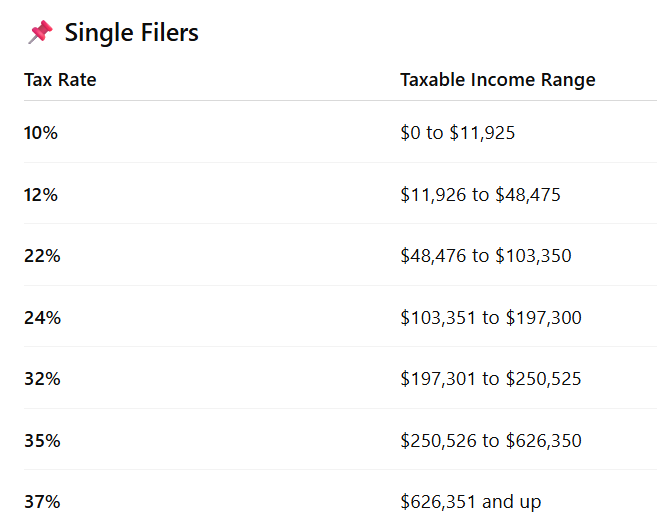
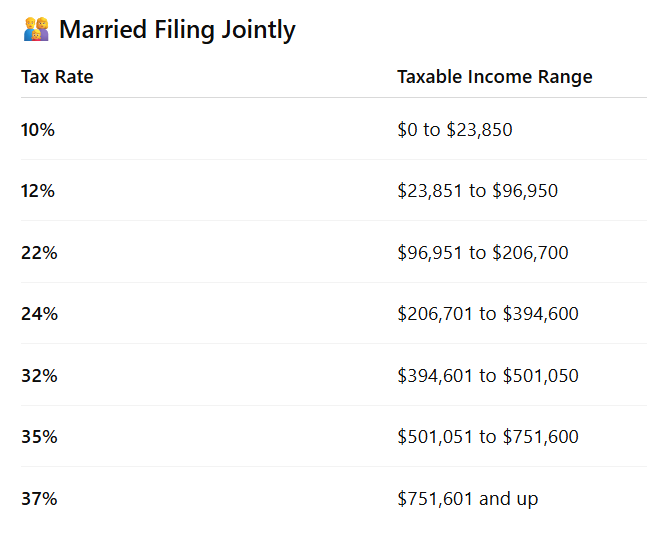
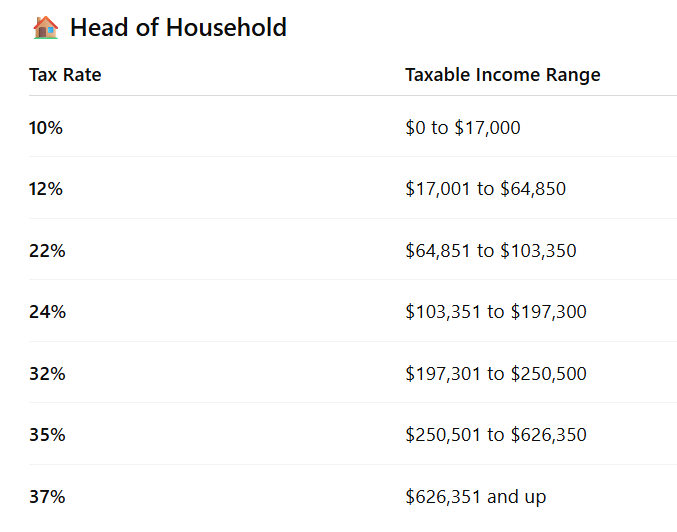
For the 2025 tax year, the U.S. federal income tax system continues with seven tax brackets ranging from 10% to 37%. These brackets are indexed for inflation each year, helping prevent “bracket creep.”
💡 How Tax Brackets Work
Rather than tipping your entire income into a higher rate, only the income within each bracket gets taxed at that rate.
Example:
If you’re single with $60,000 in taxable income:
The first $11,925 is taxed at 10% - $1,192.50
The next slice up to $48,475 is taxed at 12% - $4,386.00
Only the amount over $48,475 up to $60,000 gets taxed at 22% - $2,535.28
TOTAL TAX - $8,113.78
Tax Bracket is 22% but EFFECTIVE TAX RATE is tax/taxable income = 13.5%
This “layered” structure helps keep your average tax rate (a.k.a. effective rate) lower than your marginal rate.
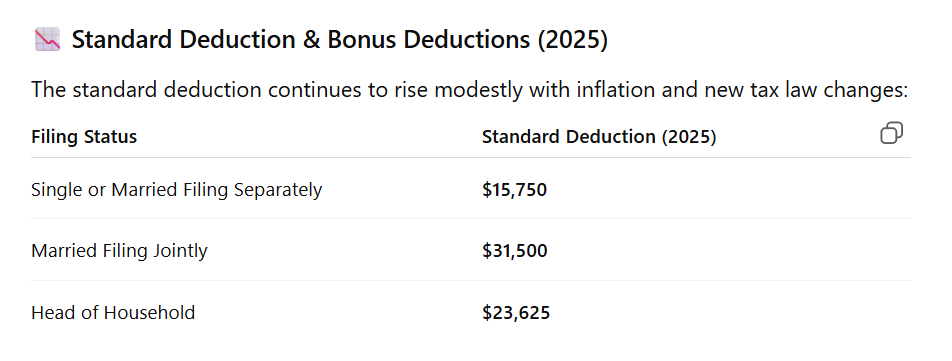
Additional Deductions for Seniors and the Blind:
Taxpayers aged 65+ or blind can each claim an additional $2,000 on top of the standard deduction. Under the 2025 tax law (the One Big Beautiful Bill Act), individuals 65+ can each take an additional $6,000 bonus deduction whether they itemize or use the standard deduction (subject to income phaseouts).
💼 Retirement Account Contribution Limits (2025)
Maximizing retirement contributions remains a great way to reduce taxable income and save for the future. Here’s what’s changed for the 2025 tax year:
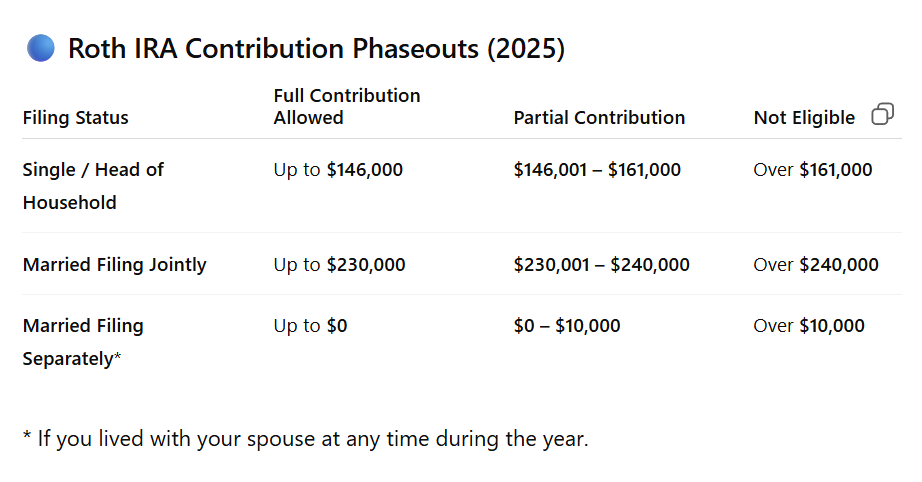
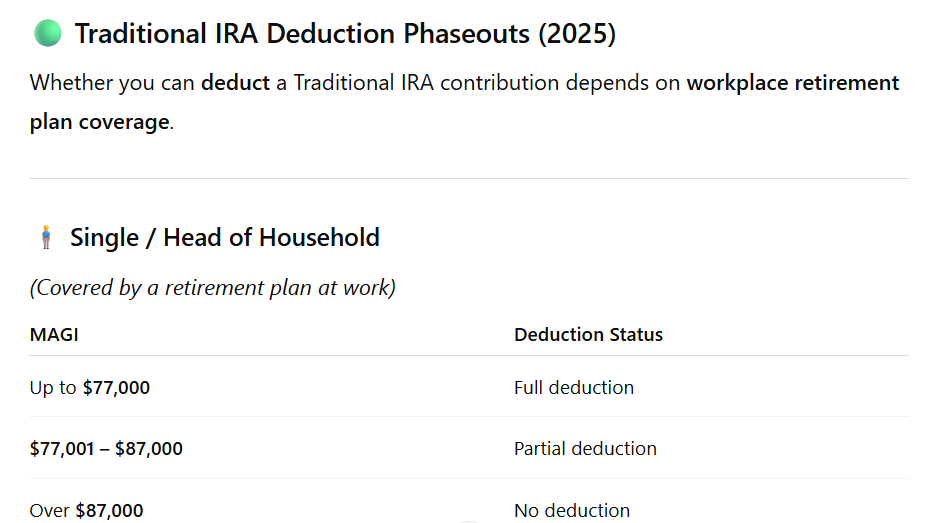
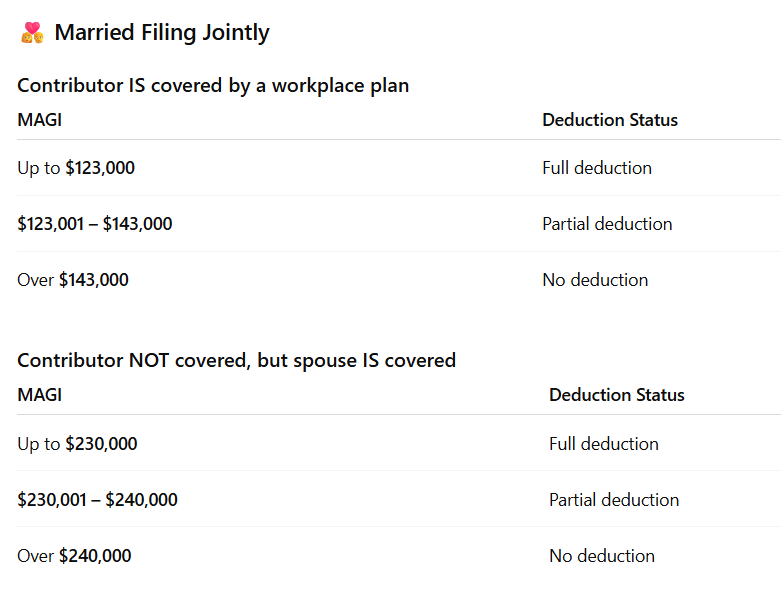
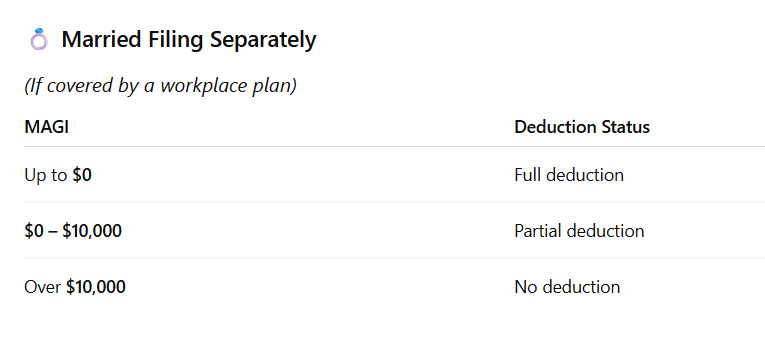
IRA Contributions
$7,000 total IRA contribution limit for individuals under age 50.
$8,000 limit if age 50 or older (includes $1,000 catch-up).
This limit applies across all IRAs combined (traditional + Roth).
401(k), 403(b), 457 Plans
$23,500 elective deferral limit for 401(k) employee contributions in 2025.
Make additional catch-up contributions if you are 50 or older:
$7,500 extra standard “catch-up”
Up to $11,250 for ages 60–63 under SECURE 2.0 provisions (if your plan allows).
$70,000 combined employer + employee contribution limit (plus catch-ups where applicable).
These contributions include both traditional (pre-tax) and Roth options.
📌 Other Useful Limits & Info
SALT Deduction Cap: If you itemize, the limit on state and local tax deductions increased to $40,000 for individuals ($20,000 if married filing separately) for 2025.
Saver’s Credit: Income thresholds for the Retirement Savings Contributions Credit (Saver’s Credit) have increased modestly.